An Age Where We Ask an H200 How to Wipe


Lately, the AI industry has been chanting "scaling" at a pace bordering on madness.
The belief is that more data, bigger parameters, and more GPUs are the answer.
But step back and look at this trend from a distance, and you run into an enormous paradox.
We dream of AGI (Artificial General Intelligence).
But what exactly does "general" mean here?
Let's take an extreme example.
Suppose a user asks an AI "what's the proper way to wipe your butt in the bathroom."
Under the current approach, the AI spins up a massive model with hundreds of billions of parameters just to answer this trivial question.
A data center that consumes as much power as an entire city runs, and cutting-edge H200 chips (roughly 50 million won apiece) radiate heat.

For a problem solvable with a search engine or a simple conditional statement (something you'd even know without AI),
we're paying astronomical computing resources and environmental destruction as the "trade-off."
My question is this.
Is this really justified?
Is blindly bulking up to cover even pointless territory really "intelligence"?
I believe this is precisely where the fundamental impossibility of AGI, or the paradox of inefficiency, lies.
From this angle, Apple's recent moves have been interesting.
Sure, they haven't overwhelmed the public commercially or in benchmark scores.
But I think the concept behind their "Apple Intelligence" showed the most realistic architecture for reaching AGI.
(It doesn't seem like a coincidence that most agentic environments emerging these days resemble a similar "structure.")
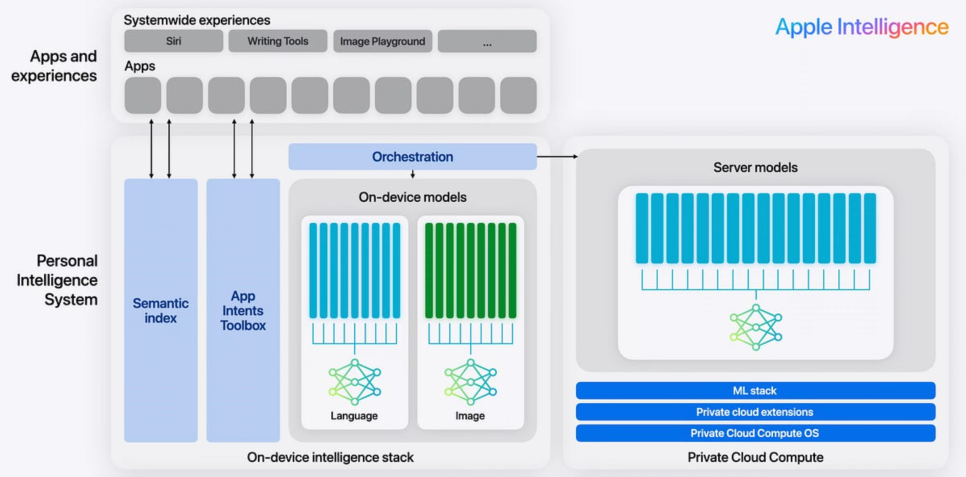
Instead of building a single omnipotent "God,"
they tried to build an integrated system of diverse micro-models.
A way of grasping the user's context
and orchestrating specialized models suited to it, deployed exactly where needed.
I believe true AGI is born right at this point.
Not chasing the illusion of "general-purpose,"
but defining problems within specific domains,
and building a massive architecture where those specialized models are organically combined.
That would be a far more efficient and realistic future.
The Bill for "Teleportation"
Let's imagine.
"A teleportation technology capable of interstellar travel has been invented, but every time it activates, it requires the lives of 100 people."
Would humanity use this technology?
And would we keep researching it? Ethically, the answer would be "no,"
but the logic of capital may be different.
That's exactly what today's AI race looks like.
What if, in order to obtain the technology called AGI, we burn astronomical amounts of energy
and pass the cost (a colonial-style sacrifice) onto underdeveloped countries or the environment?
Behind this technical efficiency, there's a hidden "bill."
This bill can be broadly divided into two items.
One is the "ethical cost," and the other is the "physical cost."
First, the ethical cost (software-level exploitation).
Under the banner of "serving humanity," today's scaling laws commit massive theft.
Copyright infringement that scrapes the world's creators' content without permission,
violations of data sovereignty that suck up data while erasing borders between nations,
and even labor exploitation that grinds down third-world workers for a pittance in the process (RLHF) of making models more human-like.
This is nothing less than "digital colonialism."
Second is the problem of physical cost (also "diminishing returns").
Even if we ignore the ethical issues and just keep pushing forward,
AI eventually runs into the massive wall called "efficiency."
In the past, the more data you fed in, the smarter it got.
This was the golden age of the so-called "Scaling Laws."
But recent research results and charts show a harsh reality.
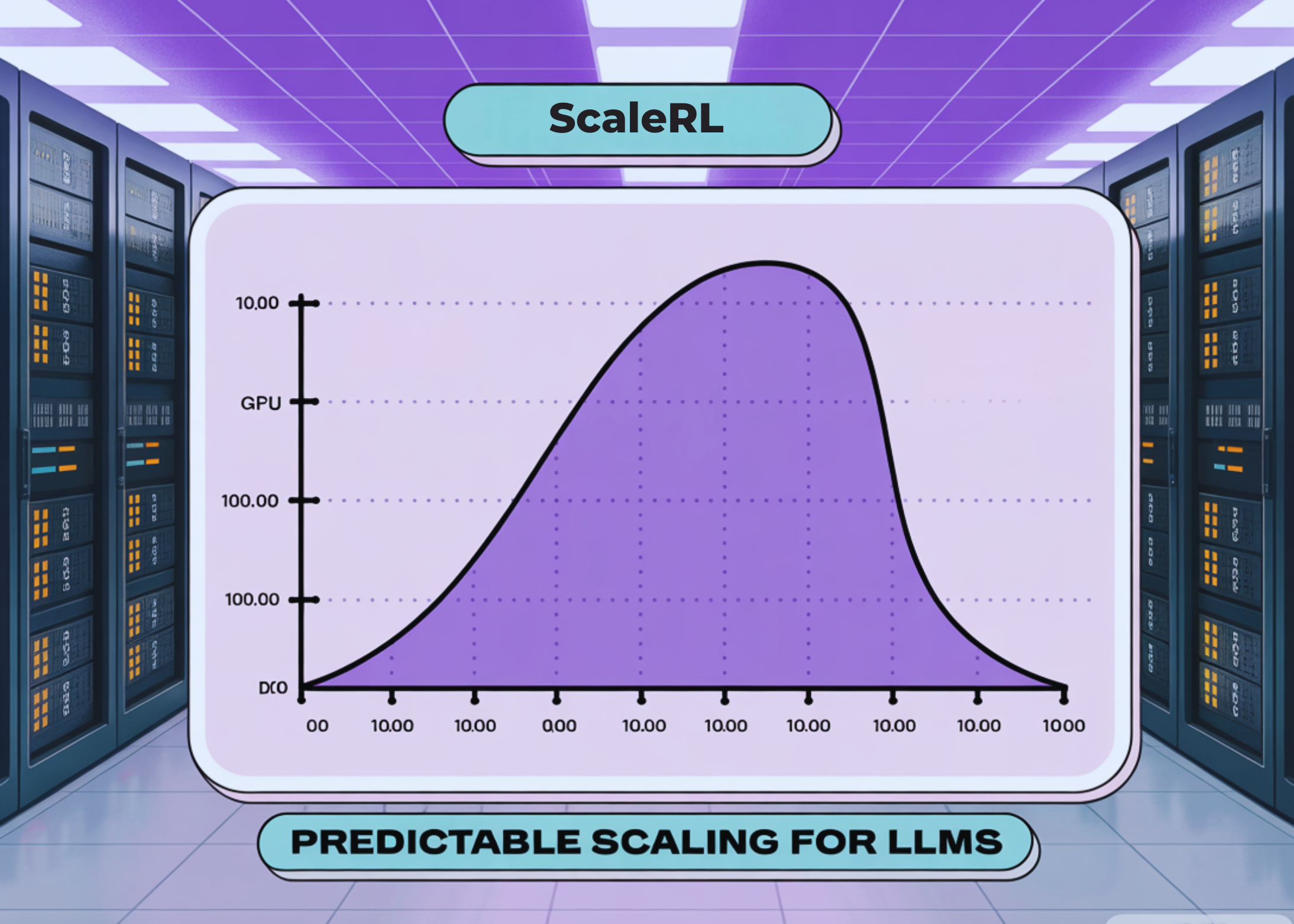
Apparently, LLM performance gains don't follow an eternal straight line but rather a "sigmoid curve" (an S-curve).
In other words, there's a strong chance we've passed the explosive growth phase and entered a "plateau" where performance gains relative to input are slowing.
Recent news coming out of Silicon Valley proves this.
There's the so-called "AI plateau" controversy — that the performance gains from next-generation models are slowing relative to the astronomical costs poured into them.
According to an MIT report,
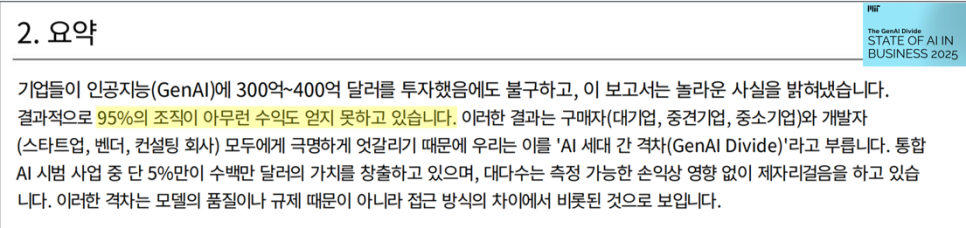
it was pointed out that, as a result, 95% of organizations are seeing no return at all.
The tremendous heat data centers emit,
the power consumption that could swallow an entire city,
and the massive waste of water resources to cool it all down.
If the result of paying all these "physical costs" is merely a decimal-point improvement in performance?
Today's Big Tech companies, faced with this dreadful ROI and physical limits,
find themselves in a dilemma where they can't help but hesitate, even if they want to scale further.
Sovereign AI and Open Source's Counterattack
Behind the astonishing feat of being able to draw anything you want in Ghibli's art style with a single "click,"
we must not forget how much digital exploitation was involved.
How can we stop the digital colonialism being carried out in the name of "AI training"?
The movement toward this is precisely "Sovereign AI" and "Open Source."
Open Source:
By making public the weights that are the core of AI, it shares the "veiled technology" once known only to giant corporations with everyone, helping anyone develop AI — much like a modern-day Promethean fire.
Their logic is clear.
We will not let our data and intelligence become dependent on the servers of a particular Big Tech company (a US corporation).
This open-source movement, ignited in the past by France's Mistral or Meta's Llama,
is not simply about using free models.
It is a "democratization of intelligence" and a "movement to reclaim data sovereignty."
But there is a fatal blind spot here.
No matter how democratized the models become and how open the source is,
how will we cover the physical resources — electricity, GPUs — needed to actually run it?
Software can be shared, but hardware cannot.
We now find ourselves in the paradoxical situation of being able to shout "freedom" only atop the servers and electricity that Big Tech capital has laid down.
The Arrival of a Hero(?)
But then, while everyone else fights morality, physical laws, and power shortages here on Earth,
someone appears who changes the rules of the game entirely.
None other than Elon Musk, known as the real-life model for Iron Man.
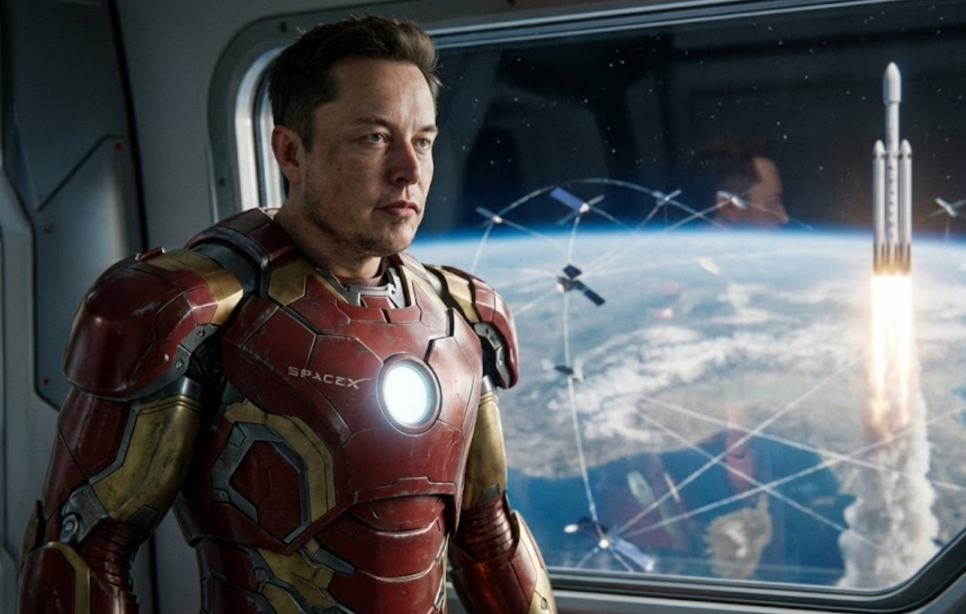
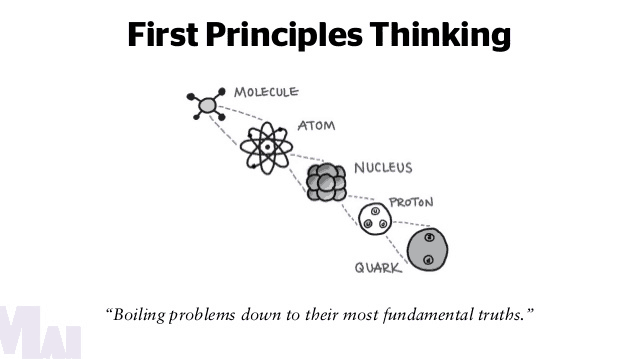
His calculation is simple but overwhelming. (First Principles Thinking)
It's building a data center in space.
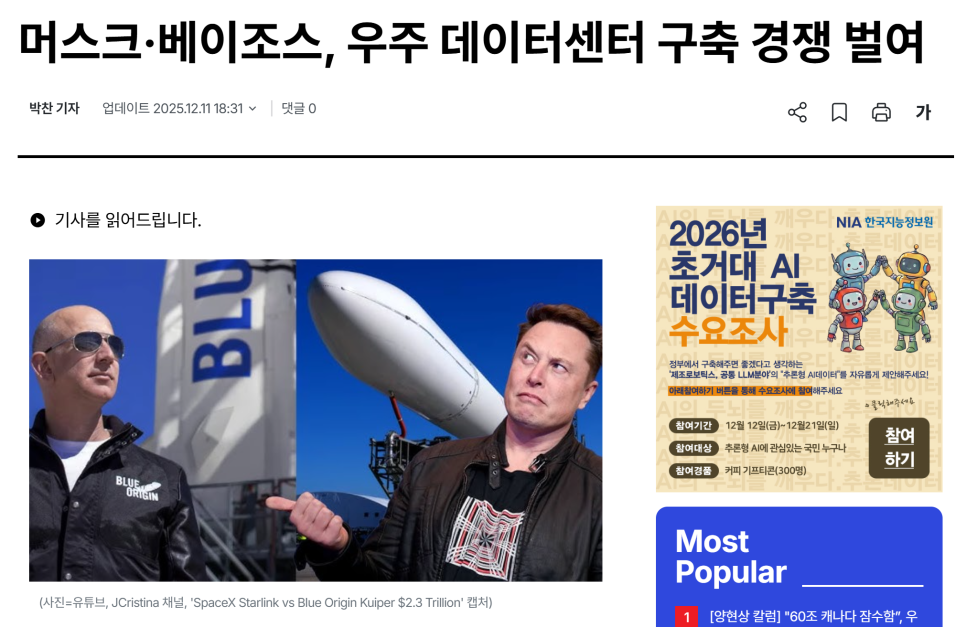

What happens once a space data center is built?
Cooling: Water shortage? Using an environment close to absolute zero (-270°C) in space brings cooling costs to nearly zero.
Power: Carbon emissions? Receiving 24-hour solar power in space, undisturbed by the atmosphere, supplies nearly infinite clean energy.
What does this mean?
While other companies are forced to stop scaling because of Earth's environmental regulations and electricity bills,
he can scale infinitely in space without constraints.
Of course, what Musk has solved is not the "digital colonialism" discussed earlier.
But by cutting off the "physical shackles," he could create a gap that no one else can catch up to.
No company on Earth would be able to match this level of efficiency.
If the space data center is completed, it's obvious that dominance will pass to him.
It looks close to a "hero" realizing AGI without polluting the Earth.
But this is where the fear begins.
Not because he's a "villain." (I like Elon Musk.)
Rather, it's that he alone would come to hold far too perfect a degree of control.
In other words, the owner of the Iron Man suit would be a single "individual" beyond the reach of law.
Who Should the Iron Man Suit Belong To?

This brings to mind the congressional hearing scene from the movie .
The government demands that the Iron Man suit be handed over, and Tony Stark refuses, saying "I am the suit."
What if it's handed over to the state?
Who is "the state"? Strictly speaking, it's nothing more than "the current government."
Is it really safe to transfer this right to bureaucrats?
They merely exploit rights under the pretext of regulation, and it's questionable whether they even have the capacity to control such a massive technology.
What if an individual monopolizes it?
We would have to pray that individual is "Tony Stark (a hero)."
What if he turns out to be a villain? Or if he becomes corrupted? We cannot leave humanity's fate to the whims of a single person.
In the end, "regulation" is necessary.
But I believe regulation must mean "decentralization."
The most ideal approach
is for elites from around the world to gather and create an institution with distributed authority,
establishing AI infrastructure as "humanity's shared public project."

Some might say we should decide this by a vote of all humanity.
But let's look at reality coldly.
Democracy is premised on the idea that "every human makes rational judgments,"
but unfortunately, in the real world, there are far too many people who don't make rational judgments (bluntly put, fools).
The fact that a wise person's one vote and a foolish person's one vote carry equal weight
may be correct from the standpoint of universal human rights,
but in the face of a technological decision on which humanity's fate hangs, it's nothing more than a shackle dragging at our heels.
If I were struck with a disease that would kill me right now,
and it came down to a national referendum on whether to entrust the surgery to the medical staff at Seoul National University
or to some random man on the street,
who would follow the result of that vote?
Equality that excludes expertise becomes the most powerless and foolish idea at this point.
This is the paradox of democracy.
Therefore, we must realize Plato's "philosopher-king rule" in a modern, structural way.
Like Zhuge Liang's strategy of dividing the realm into three,
a system where elected elites representing each region — the US, Europe, Asia (China), and so on — gather, limit their number of seats,
and keep each other in check.
(Naming China as Asia's representative here isn't a personal preference. To put it coldly, "checks and balances" only work between parties of comparable strength. Just as mutual non-aggression only holds among nuclear powers, China is, realistically speaking, the only country currently equipped with the infrastructure and capital to contend with US Big Tech in terms of "AI weight class." Of course, I sincerely hope our own country can also participate as a core actor in this governance, and even come to lead it.)
An international body of agreement that manages the infrastructure as a public good, so that no single nation or company can monopolize it.
Why must it be a "public good"?
Look at the American healthcare system, a textbook example of failed privatization.
The cost of an appendectomy running into the tens of thousands of dollars,
and the barbaric sight of people dying because they couldn't afford to call an ambulance — what does this tell us?
We have already witnessed just how brutally human dignity can be trampled under the logic of capital once a necessity directly tied to life is handed over to the realm of private profit-seeking.
Why do we guard so fiercely against the privatization of health insurance in our country?
AGI will become the electricity, the food, and ultimately the right to survival of the future.
Do we want to turn this massive infrastructure into a second American health insurance system?
Of course, this may be overly optimistic.
But rather than waiting for a "benevolent dictator,"
designing "a coalition of elites who watch over one another,"
like the tripod formation described in the strategy of dividing the realm into three,
might be the closest thing to a solution for humanity to survive the coming age of AGI.
AGI ought to be a resource belonging to all of humanity, universally.
Before that immense power becomes fully bound to an uncontrollable "individual,"
I hope the "checks and balances system" we design arrives a step ahead of it.
For the sake of true, universal progress for humanity.
댓글 0